



Perspectives Soundtrack
Soundtrack by Graham Dowdall to accompany the permanent work Converse.

Incubate Residency 2024 Rosie May Jones
Incubate is an annual opportunity for emerging artists to research and develop new work in a supported residency. Taking place at partner venues within the Surrey Hills, the artist will receive a dedicated space to extend their practice in response to the surrounding landscape.
We currently have Summer residencies running at the historic National Trust Leith Hill Place and on a family-run farm near Chiddingfold where much of the land is woodland.
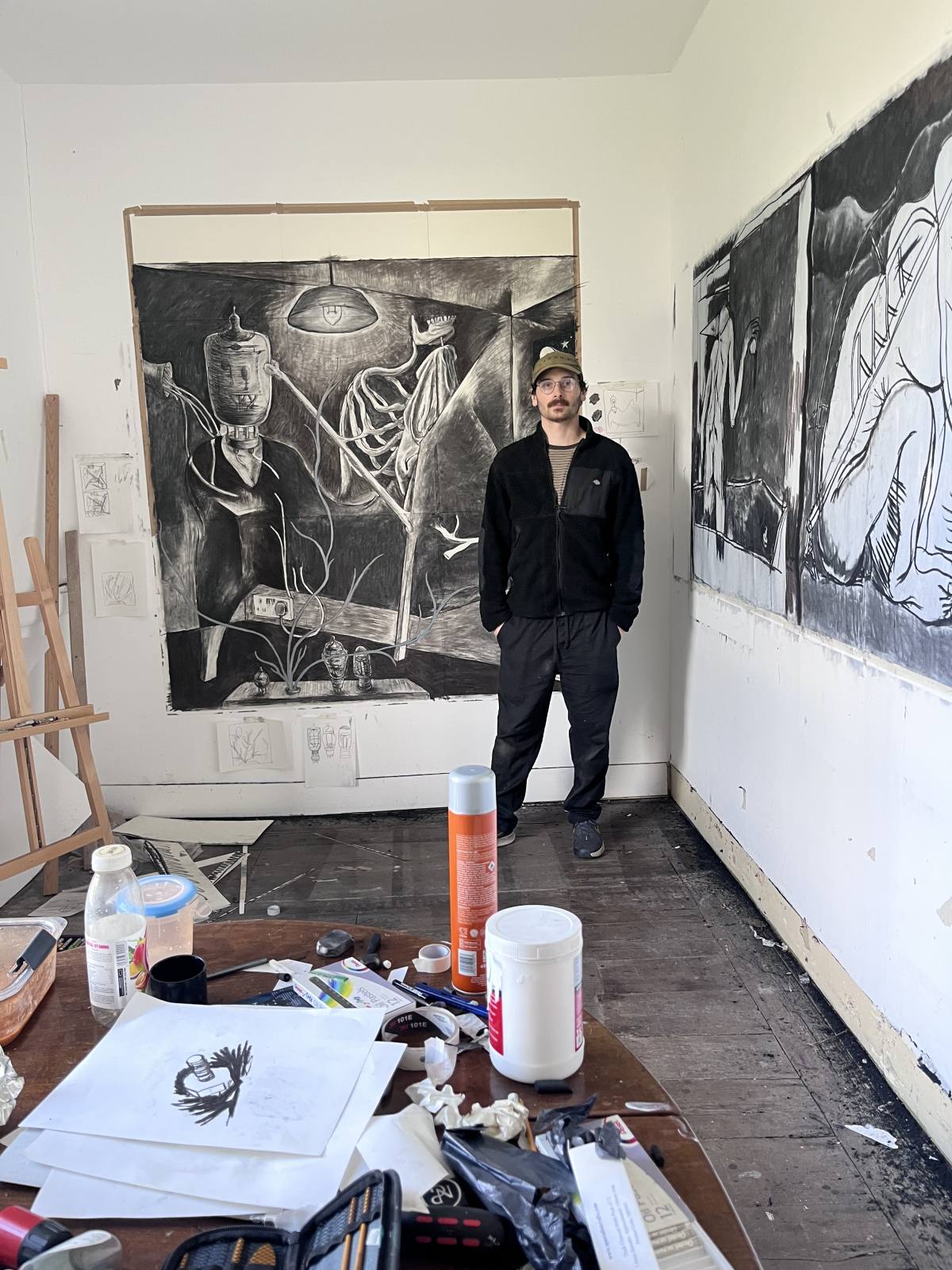
Macsen Calvert was the Leith Hill Place Incubate artist. He works to create dark, figurative artworks taking inspiration from psychoanalysis, expressionism and surrealism.
The residency has allowed me time and space to explore themes around the interaction between technology and the natural world. I have created large-scale works in charcoal and oil pastel that uses repeated motifs of the biological and technological melding into one.
Macsen Calvert
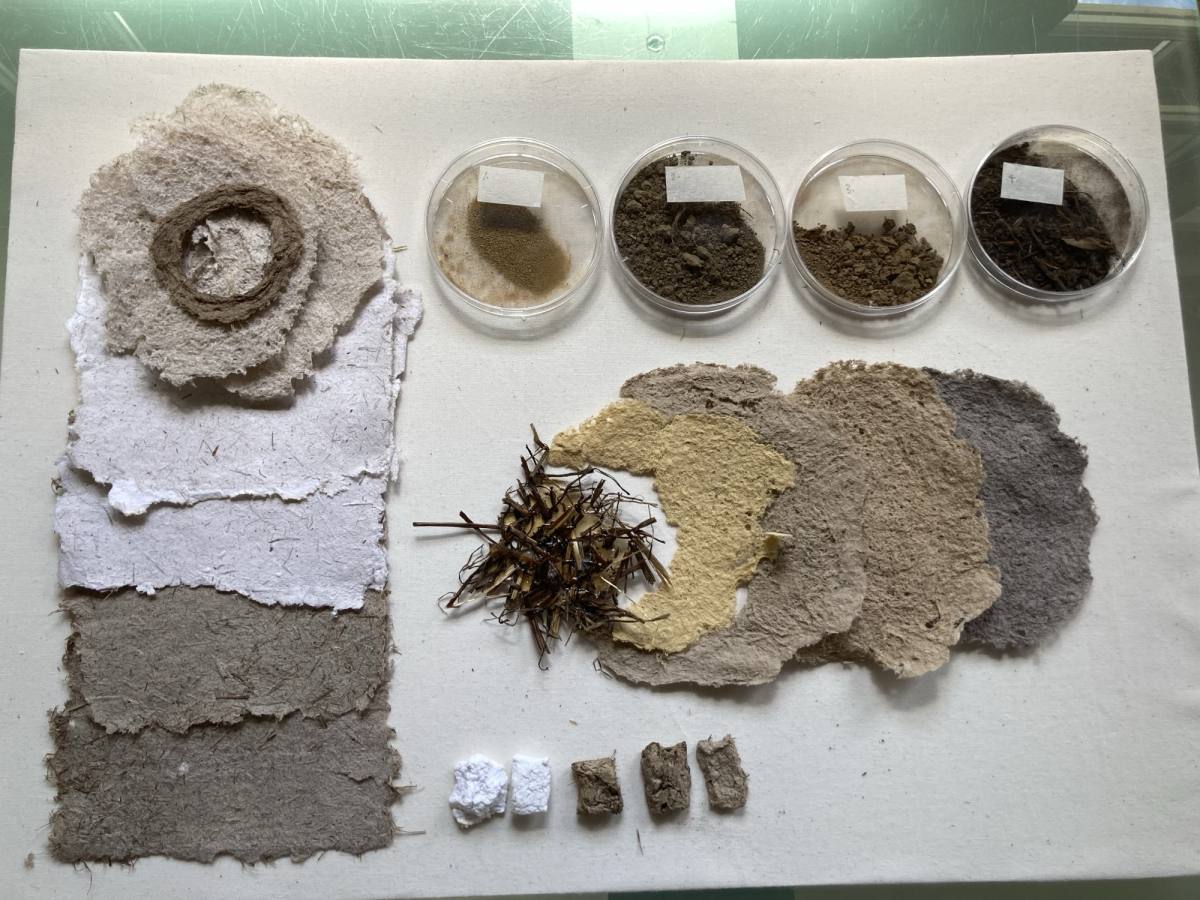
Vicky Way was the first Incubate artist based on farmland. The stone studio had just been renovated funded by the Surrey Hills ‘Farming in Protected Landscapes’ fund so was ideal for a base. Vicky was keen to explore the flora present and create natural dyes and artworks from the oak galls, hawthorn, sloe and elderberry.
Leith Hill Place artist in residence Gemma Driskell approached the residency with an open mind. Her multi-disciplinary based practice explores plants as ephemeral materials with alternative methods such as printing, sculpture, video, stop motion, participation and installation.
Gemma delved into the world of the Rhododendron woods created by Caroline Wedgwood and the materialism to be had from its surrounding environment.
Focusing on connection, she explored approaches to our relationship with the planet and ourselves, examining what there is to learn from observing and nurturing what we already have, encouraging curiosity and interaction through the language of art. Engaging people of all ages throughout her residency, Gemma gained new skills communicating through her work.
Our first Incubate artist, Rosie May Jones is a multidisciplinary artist and poet, specialising in spoken word and place-responsive performance. During her 3 month residency at Leith Hill Place, Rosie May Jones created poetry, performative research and invited the public to take part in participatory workshops to develop her inquiry: ‘How do we shape our identities through our relationship to the land?’
View one of Rosie’s video performances made during her residency – ‘Landmarks’
Read some of Rosie’s writing created during her residency – To These Hills
Previous to Incubate, we hosted research placements as part of the TECHNE scheme. Techne supports outstanding students pursuing the ‘craft’ of research through innovative, interdisciplinary and creative approaches across the range of the arts and humanities.
Rachel Holmes’ research was about the experience of exclusion. She compared the feeling of exclusion to dreaming, when we are between consciousness and unconsciousness but excluded from both. This dream state of being “in between” also describes our place in the natural environment. In society we develop fixed identities, in the natural environment we find that these identities no longer function and we become something else, something in between.
Rachel’s ‘Stories are Woven’ project aimed to map phenomena we don’t usually notice. She engaged under represented groups on regular walks and then worked with them to create embroideries from the natural elements they particularly noticed. She worked with women from the Mubarak mosque in Tilford exploring Bourne Woods who completed a collaborative hanging displayed in the Farnham Museum. Rachel repeated this activity with adults with learning disabilities at the Grange Centre exploring the beautiful surroundings in Bookham.
Jon Mason, professional storyteller investigated and retold stories of the Surrey landscape drawing on myth & folklore and working in collaboration with a community archaeologist. The stories reflect on how human activity has shaped and continues to shape the landscape, uncovering layers of Surrey’s history from as far back as the Stone Age, and looking to the future. Combining his research and performance skills, Jon is led ‘story walks’ and created a series of podcasts to enhance visitor’s experiences of the hills.
‘We make sense of the experiences we have of the world around us by creating stories about it and sharing those with other people. Stories are all around us and a vital part of our culture. Through this placement I aim to give an insight into the relationship between human society, landscape and climate, with the potential for making positive changes to future behaviour.’
You can find links to Jon’s audio story telling through QR codes at the Devil’s Punch bowl, Frensham Ponds and Hascombe Hill.
Liz K Miller explored the essential relationship between humans and trees in her Forest Listening project. Liz recorded the sound of rain beneath the sandy forest floor at Blackheath Forest, and from this sonic data created a visualisation of this sound. Her interest is Green Water, the moisture that cycles through plants, and this art installation highlights the complexity and fragility of these essential ecosystems, re-connecting humans with our non-human companion species – the trees.
Her second residency was in the Limnerslease woodland at Watts Gallery where she created a journey through the trees with her sonic banners. Liz successfully engaged with audience here with an online Q&A in lockdown.
Artist Amie Rai travelled across the Surrey Hills through 2018-19 communicating with visitors on their thoughts, memories and ideas about their local landscapes. As part of her research, she took tree root readings in each location she visited intrigued by the communication between trees. Her pop-up book structure created content as it moved location and ended at the Guildford Book Festival bearing the stories of people in the different sites.
Writer Neal Cahoon explored a 5-mile section of the North Downs Way, between Chantry Woods, Guildford, and ‘Silent Pool’. He made regular walks and recordings along this beautiful stretch whilst developing the Surrey Soundscapes project.
Eight “listening posts” were installed along the trail bearing Neal’s intriguing writings inspired by each location. These wooden boards linked viewers to a website containing the site specific sound tracks that brought those captured sounds collected through different seasons to the forefront of the experience. From the humming of thousands of wasps on Holmbury Hill to the underwater recordings at Silent Pool, they created a new way to experience the North Downs Way in the Surrey Hills.


